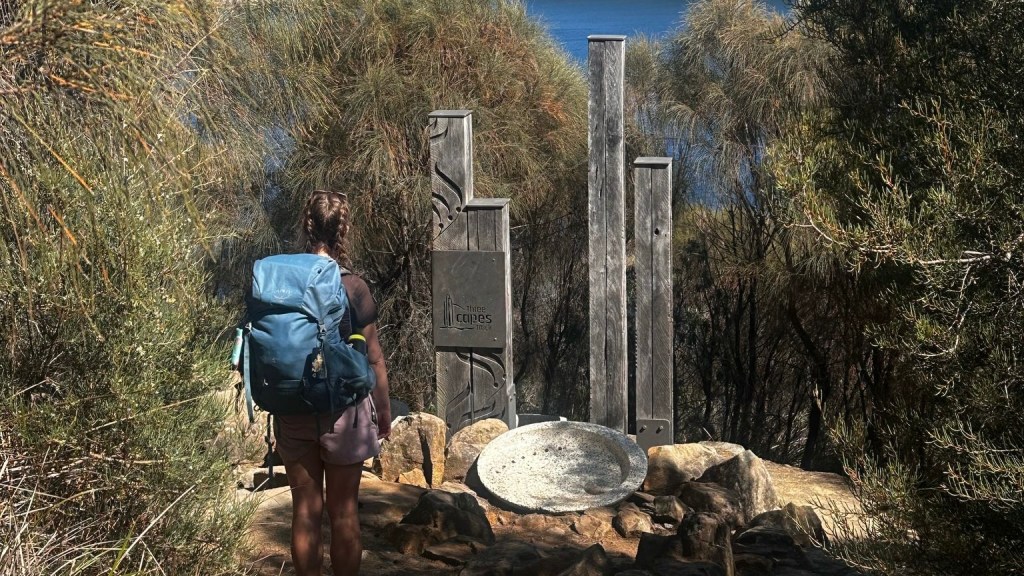
Designed for walkers of all experience levels, the Three Capes Track links Cape Hauy and Cape Pillar (but only offers views of Cape Raoul) via a 48km trail offering stunning viewpoints of Tasmania’s dramatic coastline: from towering cliffs to ancient forests. It’s a managed, fee-based trail, but where your money goes is immediately apparent: elevated walkways and viewing platforms protect delicate habitats, while well-appointed eco-lodges provide comfortable accommodation along the route.
I thru-hiked the trail in March 2025. For a closer look at the on-the-ground experience, head over to my Three Capes Track: Trail Journal post for my stats, budget, photos and story.
- Quick Facts
- Map & Elevation Profile
- Preparation
- On-Trail Practicalities
- Side Missions & Connecting Trails
- Hiking as a Solo Woman
- Want More?
Quick Facts
| Distance | 48 km |
| Elevation gain & loss | + 1,980 m / – 1,955 m |
| Days to complete | 4 |
| Best season | Spring (October) to Autumn (April) |
| Trailheads | Port Arthur Historic Site |
| Recommended direction | Anti-clockwise is mandatory |
Map & Elevation Profile
Preparation
Permits
Many of Tasmania’s walks require booking, and the Three Capes is one of them. This trail is very popular between October and April, so you’ll need to book well in advance if you’re travelling with a large party. Those travelling solo or in pairs might be able to get away with last-minute bookings. If your preferred dates are sold out, keep checking back: often, as the start date creeps closer more slots will become available as others reschedule their plans.
Trailheads & getting there
The official starting point is the Port Arthur Historic Site which lies on the Tasman Peninsula, a 1.5 to 2 hour drive from the state’s capital, Hobart. The permit fee includes both entry to the Site (valid for a year) and the cost of parking at the Site for the duration of your hike. Those without a car can look into an organised bus shuttle to the Site. Return tickets are available, and schedules are designed around your expected ETA. But frankly, if there’s more than one person in your group it’s probably worth hiring a car rather than getting the shuttle – it will work out cheaper and give you more flexibility.
Your first footsteps, however, will be across the Peninsula at Denmans Cove: your trail permit includes a scenic boat ride down the peninsula, offering an introduction to the landscape and local fauna.
At the end of the trail in Fortescue Bay, you’ll be ferried back to Port Arthur via bus – cost included in your permit.
Direction to Walk
The trail must be completed anticlockwise; clockwise is not permitted.
Season to Walk
The trail can be completed year-round, but the Tasmanian climate is not to be underestimated. Even in summer, weather can be highly variable and you should be prepared for cool, wet and windy conditions. In winter, extra layers will be essential as the temperature drops and the cliffs get windier than usual.
Wildlife
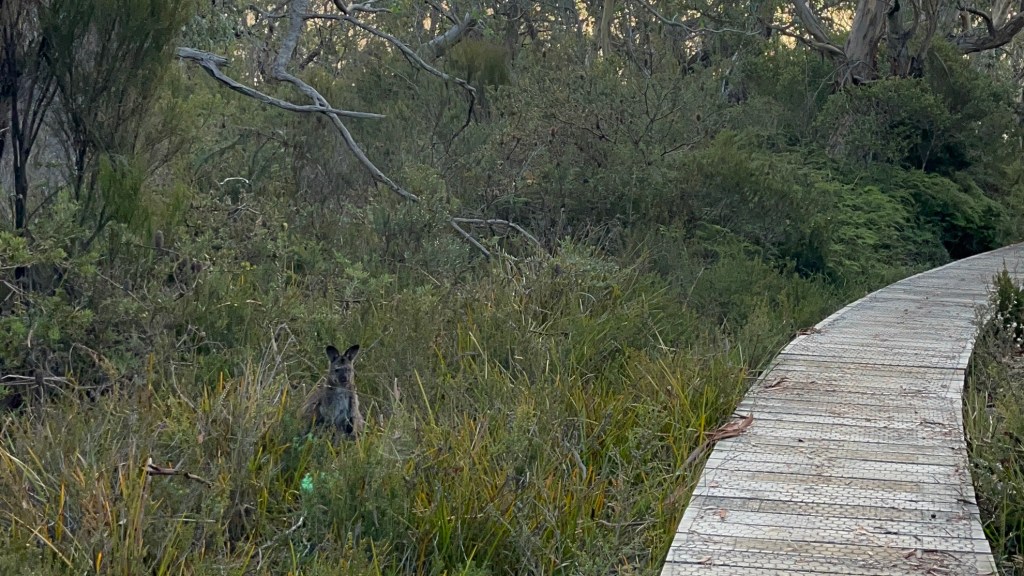
There’s plenty of wildlife to be seen, from seals to wallabies, wombats and echidnas. But this is Australia, so snakes are also found on trail during the warmer months: happily, there are no venomous snakes in the region.
Accommodation
You’re required to stay in the eco-lodges: your bed in a dorm-style room is included in your permit. If you book with others in the same transaction, you’ll most likely be bunked together.
Camping of any kind is not permitted along the track, but there is a commercial campsite at Fortescue Bay, where the walking ends. However if you stay here you’ll need to arrange your own way out of the area, as you’ll miss the bus shuttle back to Port Arthur that’s included in your booking.
Gear List
You can essentially pack for this hike as though it’s a short weekend getaway. Travel as light as possible. Some notable things you’ll need to bring are a sleeping bag, and all of your food for the entire trek. Check out the Tasmania Parks & Wildlife Service packing list, here.
It’s best to be prepared for all weather in Tassie; there have been lots of news reports lately about rescues of unprepared hikers.
Possible Stages
You’ll be required to stick to the stages laid out in your permit, which can’t be tailored given the need to manage the number of people in each hut at any given time.
| Place | Distance from previous (km) |
|---|---|
| Denman’s Cove | 0 |
| Surveyor’s Hut | 4 |
| Munro Hut | 11 |
| Retakunna Hut | 19 |
| Fortescue Bay | 14 |
On-Trail Practicalities
Finding Your Way
Trail Markings
The trail is very well marked and maintained; you’ll find colour-coded posts, signs and trail markers at regular intervals. You’ll never be navigating without on-the-ground guidance.
Maps & GPX
You could get away without a map on this track: it’d be pretty difficult to get lost. A general map is included in the booklet you’re given at the start of the walk.
I still like to have some way to navigate, so I downloaded a GPX file of the track from Aussie Bushwalking and added it to my Garmin Explore app.
It’s always best practice to carry a map. You’ll be given a booklet about the walk when you arrive at Port Arthur, which outlines the route and prov. I prefer using my Garmin Explore app, to which I added this GPX file from Aussie Bushwalking.
Guidebooks & Resources
You don’t need a guidebook for this route, because Tasmania Parks & Wildlife has you covered. Check out the walking notes on the Three Capes Track page; you’ll also be given a small booklet at the start of the track with detailed information about the track and the area. Each of the huts also features a small library (with the same books available in all three huts, so you don’t need to lug them around) which includes a few titles relevant to the area’s history, geography, flora and fauna.
Food & Water
All the huts include well-equipped kitchens: but you’ll need to prepare and carry everything you want to eat. That’s a minimum of 3 breakfasts, 4 lunches, 3 dinners plus snacks. There’s nowhere to purchase additional supplies, so if you’re caught short you’ll have to rely on the kindness of other hikers.
There are no natural water sources on trail, but safe drinking water is available on tap at each hut: you’ll just need enough carrying capacity to cover you on the 19km day. In summer temperatures can soar – you’ll want a minimum of 2L, perhaps even more.
On-Trail Transport
Once you’ve left Port Arthur, the trail is completely remote and there are no public or private commercial transport options; nor can you (or your support crew) drive between lodges. Emergency vehicle access is via park rangers and lodge staff.
Money Matters
The only times you’re going to need money are at the Port Arthur gift shop and cafe, and / or the Fortescue Bay campsite showers. Both accept card, so you can leave the cash at home.
Side Missions & Connecting Trails
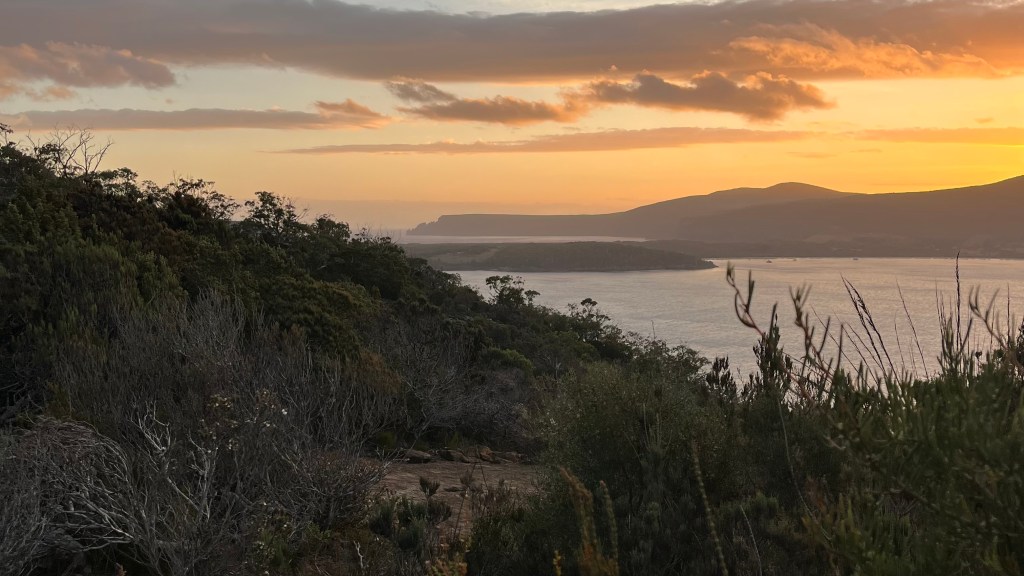
Technically heading out to Cape Huay on your final day is a side trip: it’s an out-and-back section just off the main trail that’s well worth the stairs. However other than this it’s quite difficult to incorporate any side missions. As you arrive in Fortescue Bay there are several additional hikes in the area you could tackle: but this means you’ll need to leave a car there or arrange some other form of transport at the end of your hike.
Hiking as a Solo Woman
I hiked this trail with a friend, but it would be an excellent first solo trail for anyone during the summer. It’s extremely well maintained, wardens are present at all huts and offer a wealth of information, and there are plenty of other friendly people on trail. Mobile reception can be limited in places, depending on your service provider: but again, there are plenty of people on trail and the hut wardens will be expecting you.
Want More?
Check out my Three Capes Track: Trail Journal for stats, stories and snapshots from the trail.
 Thru Horizons
Leave a comment