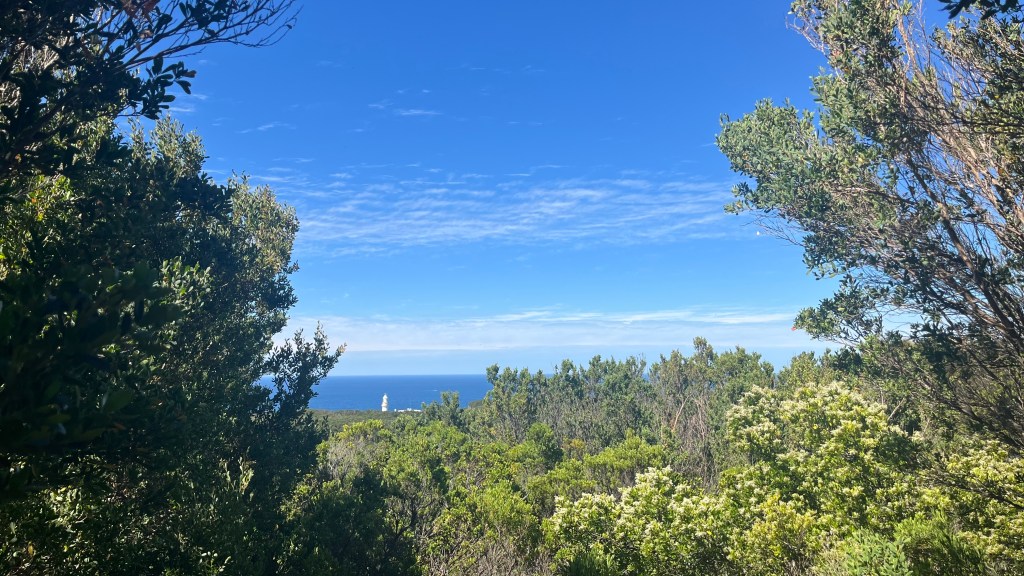
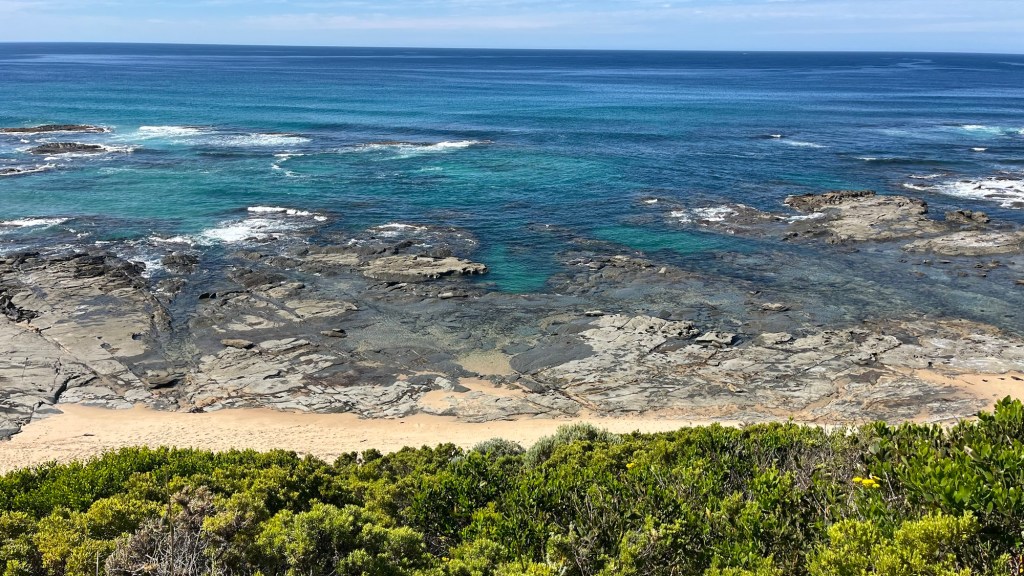
The Great Ocean Walk is the Great Ocean Road, slowed right down. Instead of watching the Shipwreck Coast flash past a car window, move through it at walking pace with time to take it all in: wind-swept clifftops, quiet eucalypt forest, deserted beaches and tranquil inlets. It’s a far more immersive way to experience this iconic stretch of coastline, trading traffic and crows for birdsong, fresh air and long horizons. And if you’re lucky, you’ll share the trail with some of Australia’s best wildlife: from wallabies and kangaroos in the scrub, to koalas dozing overhead, and birdlife everywhere you turn.
I thru-hiked the trail in December 2025. For a closer look at the on-the-ground experience, head over to my Great Ocean Walk: Trail Journal post for my stats, budget, photos and story.
- Quick Facts
- Map & Elevation Profile
- Preparation
- On-Trail Practicalities
- Side Missions & Connecting Trails
- Hiking as a Solo Woman
- Want More?
Quick Facts
| Distance | 104 km |
| Elevation gain & loss | + 3,000 m / – 3,000 m |
| Days to complete | 4-10 |
| Best season | Spring (September to November); Autumn (March to May) |
| Trailheads | Apollo Bay; Twelve Apostles Visitor Centre |
| Recommended direction | E2W |
Map & Elevation Profile
Preparation
Trailheads & getting there
The trail begins at the Apollo Bay Visitor Information Centre, where there are a couple of terminus markers for a great photo opportunity. It ends at the Twelve Apostles Visitor Centre, in the Port Campbell National Park.
Both Apollo Bay and the Twelve Apostles are about 3 hours’ drive from Melbourne. Most hikers will leave their car at one end of the other, and get a shuttle or the V/Line bus (currently runs only on Monday, Wednesday, Friday) to the other trailhead. I recommend leaving your car at Twelve Apostles and getting the bus to Apollo Bay, so you have greater flexibility when you finish your walk.
You can also get to each trailhead on public transport alone: from Melbourne, take a train to Geelong; from there, transfer to a V/Line coach. Expect the entire journey to take around 4-5 hours.
Direction to Walk
Parks Victoria asks that the trail be completed in a westward direction, ie starting in Apollo Bay.
There are a couple of other great reasons to walk westbound: first, you’ll be walking with the sun at your back rather than in your face; second, the elevation profile gets more serious towards the apostles, so you’ll have time to build up to it; and third, ending with the views of the apostles is definitely the more spectacular finish.
Season to Walk
The trail can be walked year-round, but you’ll want to make sure you have good waterproofs if you’re tackling it in winter. Most hikers complete the walk in spring (September to November) and Autumn (March to May), to avoid the heat over summer.
Accommodation
Beds & Bunks
With some planning, you could complete this trail staying in hotels, B&Bs or hostels. However, accommodation options are generally not on-trail, so you’ll be adding extra mileage, or you’ll need to arrange a support crew to ferry you to and from trail. Some commercial providers offer supported packages.
Camping
Wild camping is not permitted, but the trail is designed to be completed by campers so there are a good number of campgrounds dotted at convenient distances along the route. Each boasts a rainwater tank and a long-drop toilet. Campsites must be booked in advance via Parks Victoria, for a fee.
Note that there are often two campgrounds in close proximity to each other. You’ll generally want the “GOW hike-in campground” since it’s designed for walkers and you’ll be more likely to meet other hikers there. The other campground is a vehicle-accessible campground, which you could still book if you wanted to, or if the hike-in spots are booked out.
Gear List
If you’re camping, you’ll need:
- Backpack: 40-50L
- Tent
- Sleeping system: mat/pad, bag/quilt
- Hiking clothes
- PJs
- Rain layers
- 3x socks and underwear
- Hiking shoes or trail runners
- Electronics, including battery pack
- Toiletries
- Water capacity and water filter
- First aid, including snake bite first aid
- Sunscreen and insect repellent
- Fly net (strongly recommended; I forgot mine and it was not fun)
- Satellite communicator / personal locator beacon
Optional:
- Trekking poles
- Gaiters
- Warm layers (depending on time of year; in summer, your rain gear will probably suffice)
Possible Stages
| Place | Distance from previous (km) (E2W) |
|---|---|
| Apollo Bay | 0 |
| Elliot Ridge Campground | 10 |
| Blanket Bay Campground | 12 |
| Cape Otway Campground | 11 |
| Aire River Campground | 10 |
| Johanna Beach Campground | 14 |
| Ryan’s Den Campground | 14 |
| Devil’s Kitchen Campground | 13 |
| Princetown Recreation Reserve* | 11 |
| Twelve Apostles Visitor Centre | 7 |
* Princetown Recreation Reserve isn’t an official Great Ocean Walk campsite, but it is a convenient option for a short final day (and a shower). But note there’s only bore water here, and filtering usually won’t cut it to remove potential contaminants; so you’ll want to bring enough water from Devil’s Kitchen to last you to the end of trail.
On-Trail Practicalities
Finding Your Way
Trail Markings
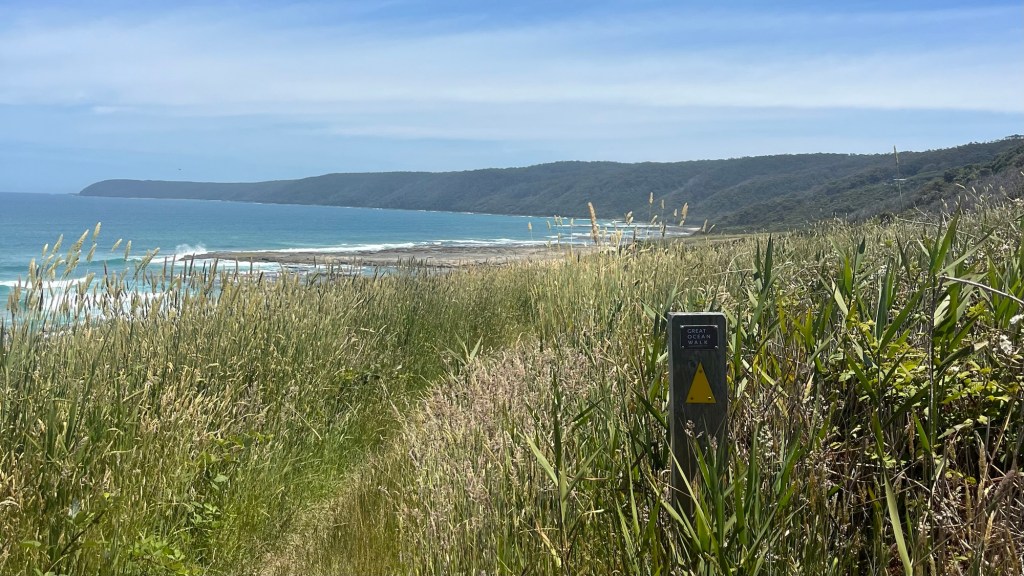
The trail marker is a yellow triangle pointing you in the direction of the trail. The trail is extremely well marked, and you’ll rarely have to check your map, although you should still bring one, in case one of the markers has been beaten by the elements, and/or so you can find exit points if needed.
A couple of times per day there are signs indicating the distance to the next big landmark. They can seem a bit misleading to a thru-hiker if you’re not paying attention: for example, the sign might say how far it is to Johanna Beach, but that doesn’t include the extra distance to the Johanna Beach GOW campground.
Maps & GPX
Parks Victoria publish a Great Ocean Walk map with accompanying track notes, available in paper format only. For those who prefer to use an app, there’s no official GPX of the trail, but I used the route available on the Fastest Known Time website and it was near-perfect, it just doesn’t show some of the available alternates, like those along the beaches.
Guidebooks & Resources
Parks Victoria publishes a Great Ocean Walk official booklet, which is more-or-less identical to the paper map, just in spiral-bound format. It’s got a great view of the elevation profile of each stage, as well. Otherwise, check out the Woodslane Walking Guides The Great Ocean Walk.
Food & Water
You’ll need to carry all your food with you for this trail; there are no resupply options along the way, except for the small tourist shop at the Cape Otway Lighthouse which doesn’t have a whole lot on offer.
Each campground (except Princetown Recreation Reserve) has a rainwater tank; you’ll need to bring a filter. Parks Victoria doesn’t guarantee there will be water in the tanks, so you’ll probably want to look at recent rainfall before setting off.
On-Trail Transport
Although the V/Line runs to Apollo Bay and the Twelve Apostles, it doesn’t really stop anywhere in the middle. Instead, you’ll need to make your way out under your own steam, or you could try and get hold of a commercial shuttle service (noting mobile service is patchy, so this may not always be a realistic option). If you’re really desperate you could try hitchhiking from one of the vehicle-accessible campgrounds, or from a couple of spots where the trail comes close to the Great Ocean Road – I didn’t do this, though, so can’t speak to how easy it would be.
Mobile Service
Mobile service is infrequent along the trail. Those on the Telstra network have the best chance of catching a bar or two at Blanket Bay, the high route between Blanket Bay and Cape Otway, Johanna GOW hike-in campground, Milanesia Beach, Ryans Den, Moonlight Head, Devils Kitchen, Princetown and Twelve Apostles.
But it’s still worth checking for service if you’re with another provider; I was on the Vodafone network and managed to catch a bit at Johanna and between Princetown and Twelve Apostles; I wasn’t really checking while walking, though, so there could be other spots.
Money Matters
You can leave the cash at home. Apollo Bay, Cape Otway Lighthouse and Twelve Apostles Visitor Centre all accept card (and in fact might not accept cash).
For a breakdown of what I spent on trail, head over to my Great Ocean Walk: Trail Journal.
Hazards
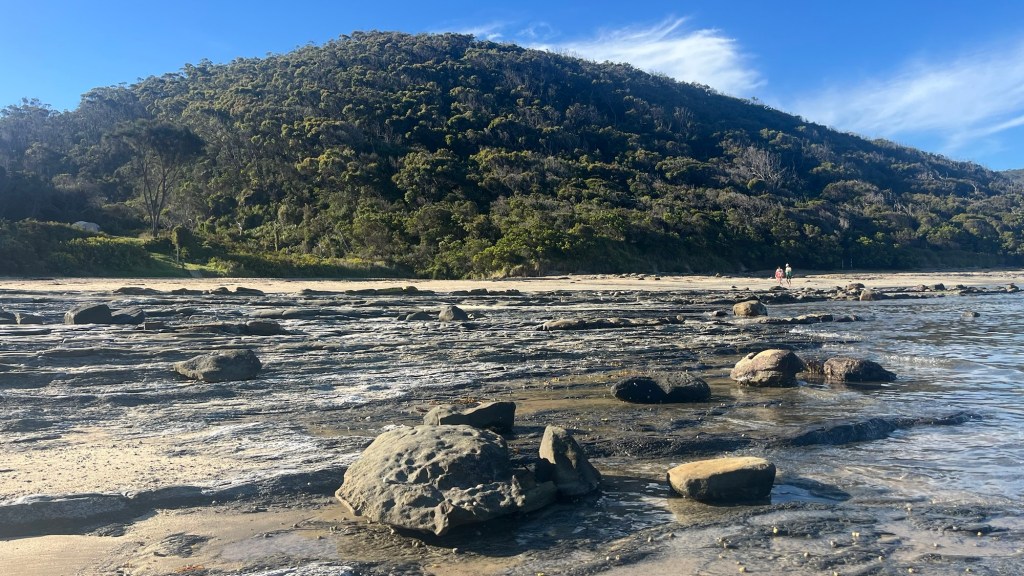
The walk is situated along the “Shipwreck Coast”, and it isn’t difficult to see why it’s earned that moniker: a lot of the beaches are very rocky, and feature pretty rough swells. Be aware that there are a couple of mandatory beach/inlet crossings, for which you’ll want to know high tide times so you aren’t waiting too long for the water to recede. There are also a number of optional beach alternates; again, know your tide times. Check Willy Weather for Apollo Bay and Portland.
This is Australia, so you’ll need to keep an eye out for snakes. The Eastern Brown and Tiger are both resident along the trail, and both are venomous. Bring snake bite first aid, and/or consider gaiters. But remember they generally want nothing to do with you: I only saw one snake, and it slithered off quickly as soon as it spotted me.
Side Missions & Connecting Trails
Most side missions from the Great Ocean Walk are just short detours from the main trail that are well-signposted on the ground. These include lookouts, the Cape Otway Lighthouse, beach alternates, and day-hiking routes. Rainbow Falls is a 1km detour backwards along Station Beach; if you’re taking the beach route you might as well add on this side trip.
Hiking as a Solo Woman
I had a fantastic experience as a solo woman on this trail. Other hikers were very friendly, and I saw at least one other solo woman each day. It’d be a great first solo hike; at the Devil’s Kitchen campground shelter a lot of people have written on the wall that it was their first solo mission and they loved it.
The information available online can seem off-putting at times, with all the warnings about the wildlife and drinkable water or swells that might wash you away. But as long as you’ve done your research and know that these are things you need to think about, you’ll be fine. The walk is popular, and the availability of so many drive in campgrounds gives you plenty of exit options if need be.
Want More?
Check out my Great Ocean Walk: Trail Journal for stats, stories and snapshots from the trail.


Leave a Reply